

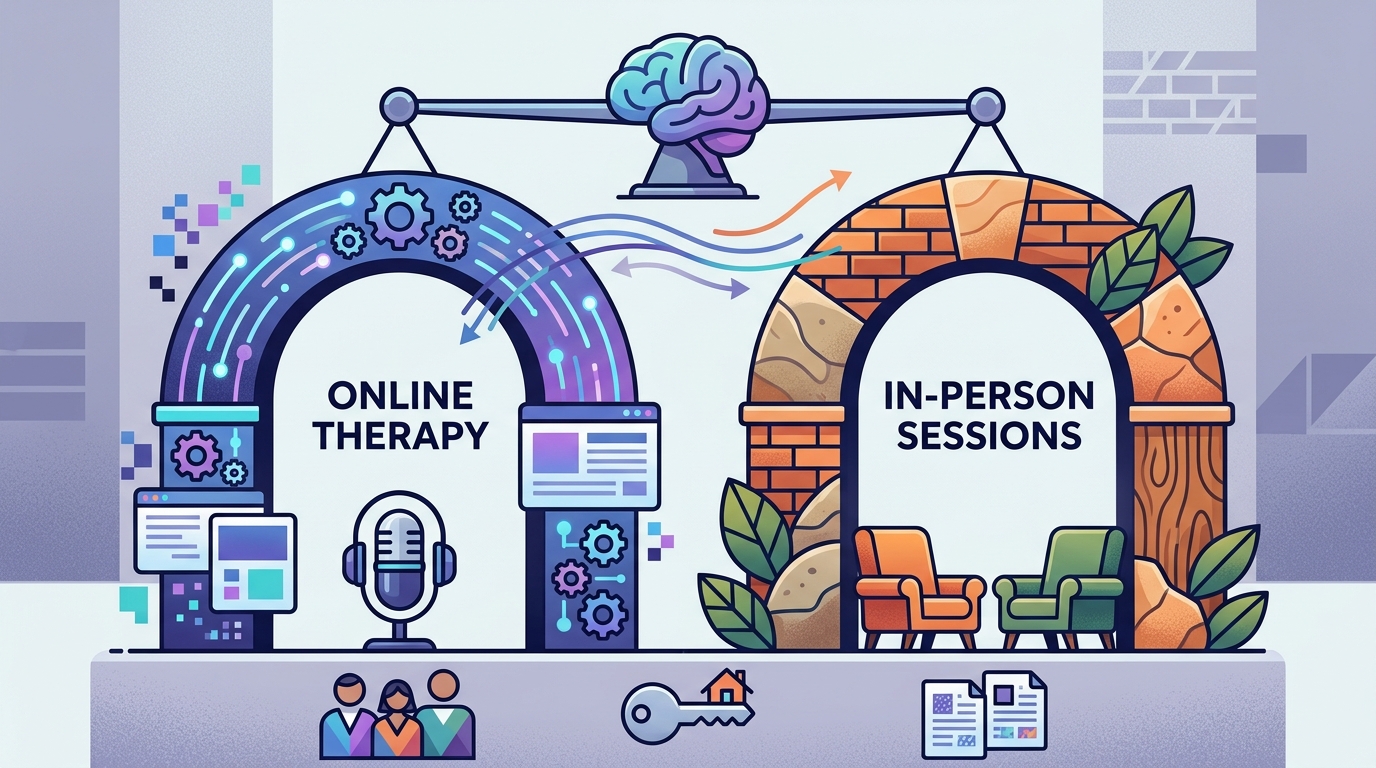
Online therapy is as effective as in-person sessions for many common mental health conditions, though specific limitations exist for severe crises. This guide examines the research on therapeutic outcomes, the role of the therapeutic alliance, and practical considerations for adults in New York and Connecticut. according to Is online therapy
Online Therapy Effectiveness
Research analyzing over 150 clinical studies indicates that online therapy achieves comparable effectiveness rates to traditional in-person therapy for conditions including depression and anxiety. Recent evidence-based analyses suggest success rates between 75% and 85% for these modalities. This data supports the use of telehealth as a primary treatment method rather than a secondary option. For adults in New York and Connecticut, this means secure virtual sessions can provide the same clinical benefits as office visits.
Conditions with Strong Evidence
Practical Implications for RBM Clients
Therapeutic Alliance
The therapeutic alliance is the collaborative bond between therapist and client that predicts treatment success. In online settings, this bond is formed through digital communication rather than physical presence. Studies show that clients can form strong alliances in telehealth, though the process may differ slightly from face-to-face interactions. Trust is built through consistent, reliable, and empathetic communication during video sessions.
Building Connection Remotely
Therapists use specific techniques to foster connection in a virtual environment. This includes maintaining eye contact through the camera, using active listening cues, and ensuring a stable, private setting for the client. The absence of physical cues like posture or subtle facial expressions requires therapists to be more attuned to verbal tone and digital engagement. For many clients, the home environment actually reduces anxiety, allowing for deeper openness and honesty.
Client Preferences and Comfort
Some clients find it easier to open up in their own space. The familiarity of the home environment can lower defenses and facilitate emotional expression. Others may prefer the neutral ground of a therapy office. At RBM, we assess each client's comfort level with virtual communication. We ensure that the digital medium supports the development of a safe and trusting therapeutic relationship, which is the cornerstone of effective treatment.
Treatment Limitations
While online therapy is effective for many, it has specific limitations that clients must understand. Technical issues, such as poor internet connectivity or audio glitches, can disrupt the flow of a session. Additionally, the home environment may contain distractions that are not present in a dedicated office space. These factors can impact the depth and consistency of the therapeutic work.
Technical and Environmental Barriers
Reliable internet access is a prerequisite for successful telehealth. Clients must have a private, quiet space where they can speak freely without interruption. If a client lives in a crowded household or a noisy environment, finding a suitable space for therapy can be challenging. This limitation may affect the ability to process sensitive or traumatic material effectively. Clients should assess their home environment before committing to a fully online treatment plan.
Scope of Practice Considerations
Not all mental health conditions are equally suited to remote treatment. While anxiety and depression respond well to online CBT, more complex or severe conditions may require in-person assessment. UCLA Health emphasizes that not everyone is a good candidate for virtual therapy. Clients with severe dissociative symptoms, active psychosis, or high suicide risk may require the immediate physical presence of a clinician. RBM therapists carefully evaluate each client's needs to determine if online therapy is the appropriate modality.
Crisis Situations
Crisis management is a critical area where online therapy differs from in-person care. In a physical office, a therapist can immediately intervene if a client becomes a danger to themselves or others. In a virtual session, the therapist is physically distant and cannot provide direct physical safety. This requires a different approach to crisis planning and response.
Developing a Safety Plan
Before starting online therapy, clients in crisis or at risk must develop a robust safety plan. This plan includes local emergency resources, trusted contacts, and clear steps to take if a crisis occurs. The therapist and client agree on protocols for what to do if a client becomes unsafe during a session. This may involve ending the session and contacting local emergency services or a designated support person. Clear communication about these boundaries is essential for safety.
Local Resource Integration
For clients in New York and Connecticut, integrating local crisis resources is vital. Therapists provide clients with information on local crisis hotlines, emergency rooms, and mobile crisis teams. This ensures that if a crisis occurs outside of a session, the client has immediate access to in-person help. RBM therapists work with clients to create personalized crisis plans that account for their specific location and support network.
Attendance Rates
One of the most significant advantages of online therapy is improved attendance rates. In-person therapy often faces barriers such as travel time, parking difficulties, and scheduling conflicts with work or family. Online therapy eliminates these logistical hurdles, making it easier for clients to show up for their sessions consistently.
Reducing No-Show Rates
Studies consistently show that telehealth clients have lower no-show rates compared to in-person clients. The convenience of attending from home reduces the friction associated with therapy. This consistency is crucial for treatment success, as regular attendance allows for the development of the therapeutic alliance and the practice of new skills. For busy adults in New York and Connecticut, this convenience can be the difference between starting therapy and dropping out.
Impact on Treatment Outcomes
Higher attendance rates directly correlate with better treatment outcomes. When clients attend more sessions, they have more opportunities to process difficult emotions and practice coping strategies. This consistency helps to break negative patterns and build resilience. At RBM, we see that clients who can easily attend their sessions are more likely to achieve their therapeutic goals. The flexibility of online therapy supports this consistency, leading to more effective and sustainable mental health care.
Key Takeaways
- Online therapy is as effective as in-person therapy for many common conditions like anxiety and depression.
- The therapeutic alliance can be successfully built in a virtual environment through consistent and empathetic communication.
- Technical issues and home distractions are the primary limitations of online therapy.
- Crisis management in online therapy requires a detailed safety plan and local resource integration.
- Online therapy significantly improves attendance rates by removing logistical barriers like travel time.
- Not all clients are suitable for online therapy; severe conditions may require in-person care.
- RBM Marriage & Family Therapy provides secure, evidence-based online sessions for adults in NY and CT. according to Is Online Therapy
Frequently Asked Questions
Is online therapy as effective as in-person therapy?
Yes, research shows that online therapy achieves comparable effectiveness rates to in-person therapy for conditions like anxiety and depression. Success rates are often between 75% and 85% for both modalities.
Can I build a strong relationship with my therapist online?
Yes, the therapeutic alliance can be formed effectively in a virtual setting. Therapists use specific techniques to build trust and connection through video sessions.
What are the main limitations of online therapy?
The main limitations include technical issues, home distractions, and the inability to provide immediate physical intervention in a crisis. Not all conditions are suitable for remote treatment.
How do therapists handle crisis situations in online sessions?
Therapists develop a safety plan with the client before starting treatment. This plan includes local emergency resources and clear protocols for responding to a crisis during a session.
Does online therapy have better attendance rates?
Yes, online therapy typically has higher attendance rates because it removes logistical barriers like travel time and parking. This consistency supports better treatment outcomes.
Who is not a good candidate for online therapy?
Clients with severe dissociative symptoms, active psychosis, or high suicide risk may not be good candidates for online therapy. These individuals may require in-person care for safety reasons.
How does RBM Marriage & Family Therapy support online clients?
RBM provides secure virtual sessions for adults in New York and Connecticut. Our licensed therapists offer evidence-based care for anxiety, burnout, and relationship stress, ensuring high-quality support from home.