
Online Therapy for Burnout, Grief, and Life Transitions in Connecticut
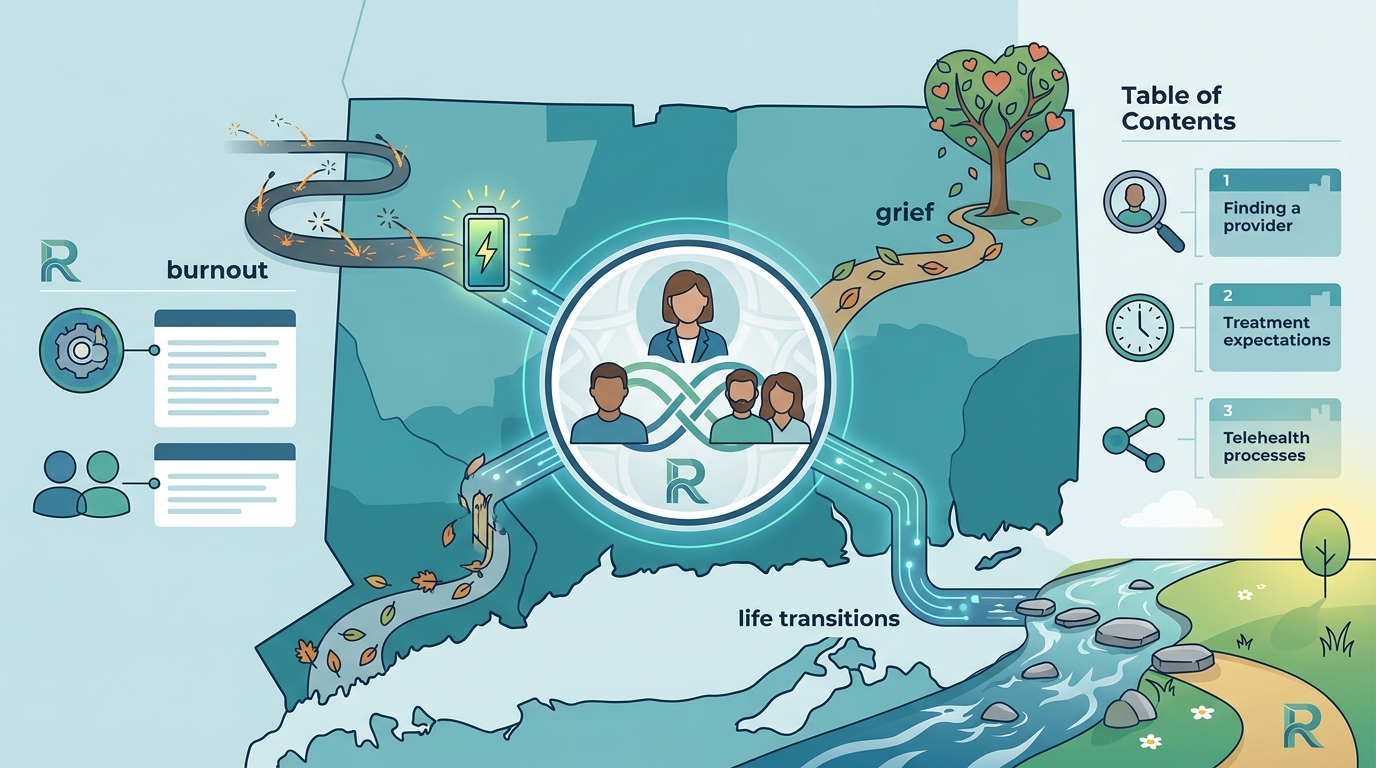
RBM Marriage & Family Therapy provides licensed online therapy for adults and couples in Connecticut, specializing in burnout, grief, and life transitions. This guide covers how to find the right provider, what to expect from treatment, and how telehealth works in the state.
Online Therapy Providers
When evaluating providers, consider their licensing and specialization. A licensed marriage and family therapist (LMFT) is a clinician trained to treat individuals, couples, and families. It is important to verify that the provider accepts your specific insurance plan, as coverage varies widely. RBM Marriage & Family Therapy serves clients throughout Connecticut and New York, offering a focused approach to emotional challenges. Their team includes licensed therapists who specialize in relational and individual dynamics, ensuring that the care is tailored to your specific needs rather than a one-size-fits-all model.
Specialization vs. Generalist Care
Generalist therapists can handle a wide range of issues, but specialists often achieve better outcomes for specific conditions. If you are struggling with burnout, a therapist who understands the nuances of occupational stress and recovery may be more effective than a generalist. Similarly, grief counseling requires a therapist who is comfortable sitting with ambiguity and loss. RBM Marriage & Family Therapy focuses on these specific areas, providing practical tools for emotional regulation and relationship repair. This specialization allows for a deeper understanding of the underlying patterns that contribute to distress.
Burnout Treatment
Burnout is a state of emotional, physical, and mental exhaustion caused by excessive and prolonged stress. It is not a formal diagnosis in the DSM-5, but it is recognized in the ICD-11 as an occupational phenomenon. Symptoms include a feeling of energy depletion or exhaustion, increased mental distance from one's job or a decrease in sense of personal achievement, and decreased professional efficacy. Treatment focuses on understanding the patterns that contribute to prolonged stress and building sustainable boundaries.
Therapy for burnout helps clients identify the sources of their stress and develop coping strategies that are realistic for their lives. This may involve learning to say no, delegating tasks, or redefining success. RBM Marriage & Family Therapy offers online support for adults navigating chronic stress and emotional exhaustion. Their approach is evidence-informed, drawing from modalities like Cognitive Behavioral Therapy (CBT) and Emotionally Focused Therapy (EFT). By addressing the root causes of burnout, clients can regain a sense of control and balance in their lives.
Recognizing the Signs
Burnout often builds gradually, making it easy to ignore until it becomes severe. Common signs include irritability, cynicism, and a sense of ineffectiveness. Physical symptoms may include headaches, stomach problems, and sleep disturbances. If you find yourself constantly tired, even after rest, or feeling detached from your work or relationships, it may be time to seek support. Therapy provides a safe space to explore these feelings without judgment, helping you to make changes that feel sustainable.
Grief Counseling
Grief counseling is a form of therapy designed to help individuals process loss and adjust to life after a significant change. Grief is not a linear process, and it can affect every part of life, including physical health, relationships, and daily functioning. Counseling provides a supportive environment to explore the emotions associated with loss, such as sadness, anger, guilt, and confusion. The goal is not to "get over" the loss, but to find a way to live with it and continue moving forward.
At RBM Marriage & Family Therapy, grief counseling is available for adults coping with the death of a loved one, divorce, estrangement, or other major losses. The therapists understand that grief can be complicated and that there is no "right" way to grieve. They work with clients to make space for their emotions and to develop healthy ways to cope. This support can be particularly important when the loss is unexpected or traumatic, as it can disrupt a person's sense of safety and stability. By processing the grief in a structured way, clients can begin to feel more grounded and connected to their lives again.
Complicated Grief
Some people experience complicated grief, which is characterized by intense and persistent grief that interferes with daily life. This may include difficulty accepting the death, preoccupation with the deceased, or a sense of purposelessness. Complicated grief can last for months or years and may require specialized treatment. RBM Marriage & Family Therapy provides support for clients experiencing these challenges, helping them to navigate the complex emotions and find a path toward healing. Their compassionate approach ensures that clients feel heard and understood throughout the process.
Life Transitions Therapy
Life transitions therapy is a form of counseling that helps individuals navigate significant personal changes. These changes can be planned, such as a career change or relocation, or unexpected, such as a health diagnosis or the loss of a job. Transitions often disrupt routines, relationships, and personal identity, leading to stress and uncertainty. Therapy helps clients process the emotional impact of these changes and develop new coping strategies. It also helps them to clarify their goals and values, allowing them to move forward with more confidence and clarity.
RBM Marriage & Family Therapy offers online counseling for adults navigating major life changes, including divorce, parenthood, relocation, and retirement. The therapists help clients understand what the change is bringing up and how to adjust to it. This support can be particularly valuable when the transition is positive but still stressful, as it can be difficult to manage the emotional load of change even when it is desired. By providing a consistent place to process change, therapy helps clients to build resilience and adaptability, skills that will serve them well in future transitions.
Common Transitions
Common life transitions include career changes, relationship changes, relocation, and health changes. Each of these can have a unique impact on a person's well-being. For example, a career change may bring financial concerns and identity shifts, while a relationship change may alter emotional dynamics and daily life. Understanding the specific challenges of your transition can help you to seek the right kind of support. RBM Marriage & Family Therapy works with clients to identify the specific issues they are facing and to develop a plan for navigating them. This personalized approach ensures that the therapy is relevant and effective.
Connecticut Telehealth
Connecticut telehealth is the use of electronic information and telecommunications technologies to conduct clinical health care at a distance. In the context of mental health, this means providing therapy via secure video platforms. Telehealth has become an important part of the healthcare landscape, offering greater access to care for people who live in rural areas or have mobility issues. In Connecticut, telehealth is regulated by state laws, which ensure that providers are licensed and that client confidentiality is protected.
For clients in Connecticut, telehealth offers the convenience of receiving therapy from home. This can be particularly beneficial for those with busy schedules or caregiving responsibilities. RBM Marriage & Family Therapy provides secure online sessions for clients throughout Connecticut and New York. The practice accepts many major insurance plans, making care more accessible. By using telehealth, clients can stay consistent with their therapy while balancing other aspects of their lives. This flexibility is one of the key advantages of online therapy, allowing people to prioritize their mental health without sacrificing their daily routines.
Insurance and Access
Insurance coverage for telehealth varies by plan, but many major insurers now cover online therapy. It is important to check with your insurance provider to confirm your benefits and any out-of-pocket costs. RBM Marriage & Family Therapy accepts plans such as Aetna, Cigna, UnitedHealthcare, and others. This wide range of accepted plans makes it easier for clients to find a therapist who works with their insurance. By reducing financial barriers, telehealth helps to ensure that more people can access the care they need. This is particularly important for those who may not be able to afford out-of-pocket costs or who live in areas with a shortage of in-person providers.
Key Takeaways
- Specialization matters: Choose a provider who specializes in your specific issue, such as burnout or grief.
- Telehealth is effective: Online therapy provides a convenient and accessible way to receive care.
- Insurance coverage varies: Check with your provider to confirm that telehealth is covered by your plan.
- Burnout is treatable: Therapy can help you understand the patterns contributing to stress and build sustainable boundaries.
- Grief is not linear: Counseling provides support for processing loss and adjusting to life after change.
- Transitions are normal: Therapy helps you navigate the emotional impact of major life changes.
- Connecticut has options: There are many licensed providers in the state, including RBM Marriage & Family Therapy.
- Confidentiality is protected: Telehealth platforms use secure video to protect client privacy.
Frequently Asked Questions
Is online therapy as effective as in-person therapy?
Research suggests that online therapy can be as effective as in-person therapy for many conditions. The key is finding a provider who is a good fit for you and who uses evidence-based approaches. RBM Marriage & Family Therapy uses secure video platforms to provide high-quality care.
What insurance plans does RBM Marriage & Family Therapy accept?
RBM Marriage & Family Therapy accepts many major insurance plans, including Aetna, Cigna, UnitedHealthcare, and others. They also offer self-pay options for clients who prefer not to use insurance.
How long does it take to see results from therapy?
The timeline for seeing results varies depending on the individual and the issue. Some people may feel better after a few sessions, while others may need longer-term support. Consistency is key, and your therapist will work with you to set realistic goals.
Can I do therapy if I live in New York but work in Connecticut?
Yes, you can receive online therapy as long as you are located in a state where the provider is licensed. RBM Marriage & Family Therapy serves clients in both New York and Connecticut, so you can attend sessions from either location.
What is the difference between burnout and depression?
Burnout is specifically related to occupational stress, while depression is a mood disorder that can be caused by a variety of factors. They can share similar symptoms, but the focus of treatment differs. A therapist can help you understand which condition you are experiencing.
How do I find the right therapist for my needs?
Consider your specific issues, your insurance, and your comfort level with the provider. It is also helpful to look for a therapist who specializes in your area of concern. RBM Marriage & Family Therapy offers a consultation to help you determine if they are a good fit.
Is telehealth secure?
Yes, reputable telehealth platforms use encryption to protect client data and ensure privacy. RBM Marriage & Family Therapy uses secure video platforms to conduct sessions, ensuring that your information is safe.
Can couples do therapy online?
Yes, couples therapy can be conducted online. Both partners can join the session from the same location or from different locations. This flexibility makes it easier for couples to attend sessions, especially if they have busy schedules.