
Telehealth marriage counseling in Connecticut is provided by licensed marriage and family therapists (LMFTs) who offer secure, video-based sessions for couples. RBM Marriage & Family Therapy is a licensed virtual practice serving couples across New York and Connecticut. This guide covers how to choose a provider, verify credentials, understand costs, and navigate the specific rules for telehealth in the region.
How to Choose a Provider
Choosing a telehealth provider requires looking beyond marketing language. A good provider offers clear clinical boundaries, specific modalities, and a team of licensed professionals. RBM Marriage & Family Therapy provides a team of licensed marriage and family therapists who specialize in relational dynamics. When evaluating a practice, look for a clear statement of who they treat and what conditions they address. Vague descriptions like "we help with everything" are often a red flag. Specificity in clinical focus, such as communication issues or conflict resolution, indicates a structured approach to treatment.
Clinical Specialization
Not all therapists are equally trained in couples work. Look for providers who explicitly list couples therapy as a primary service. RBM Marriage & Family Therapy lists specific conditions such as trust issues, infidelity, and parenting conflicts. This level of detail helps you match your specific relationship challenges with a therapist who has experience in that area.
Virtual-Only vs. Hybrid Practices
Some practices are hybrid, offering both in-person and online sessions. Others, like RBM Marriage & Family Therapy, are virtual-only. A virtual-only practice often has more streamlined technology and a deeper understanding of the specific challenges of remote therapy, such as managing screen fatigue or ensuring a private environment for sensitive conversations.
Questions to Ask Before Committing
Before booking a session, you should ask specific questions to ensure the provider is a good fit. These questions help clarify the therapeutic approach and logistical details.
- What is your primary therapeutic modality? Ask if they use evidence-based approaches like Emotionally Focused Therapy (EFT) or the Gottman Method. RBM Marriage & Family Therapy draws from CBT, EFT, and the Gottman Method.
- Do you accept my insurance? Insurance coverage varies by plan. RBM Marriage & Family Therapy accepts many major New York and Connecticut insurance plans, including Aetna, Cigna, and UnitedHealthcare.
- What is the cancellation policy? Understand the financial implications of missing a session.
- How do you handle emergencies? Ask about the protocol if a crisis occurs during a session.
Verifying Credentials and Claims
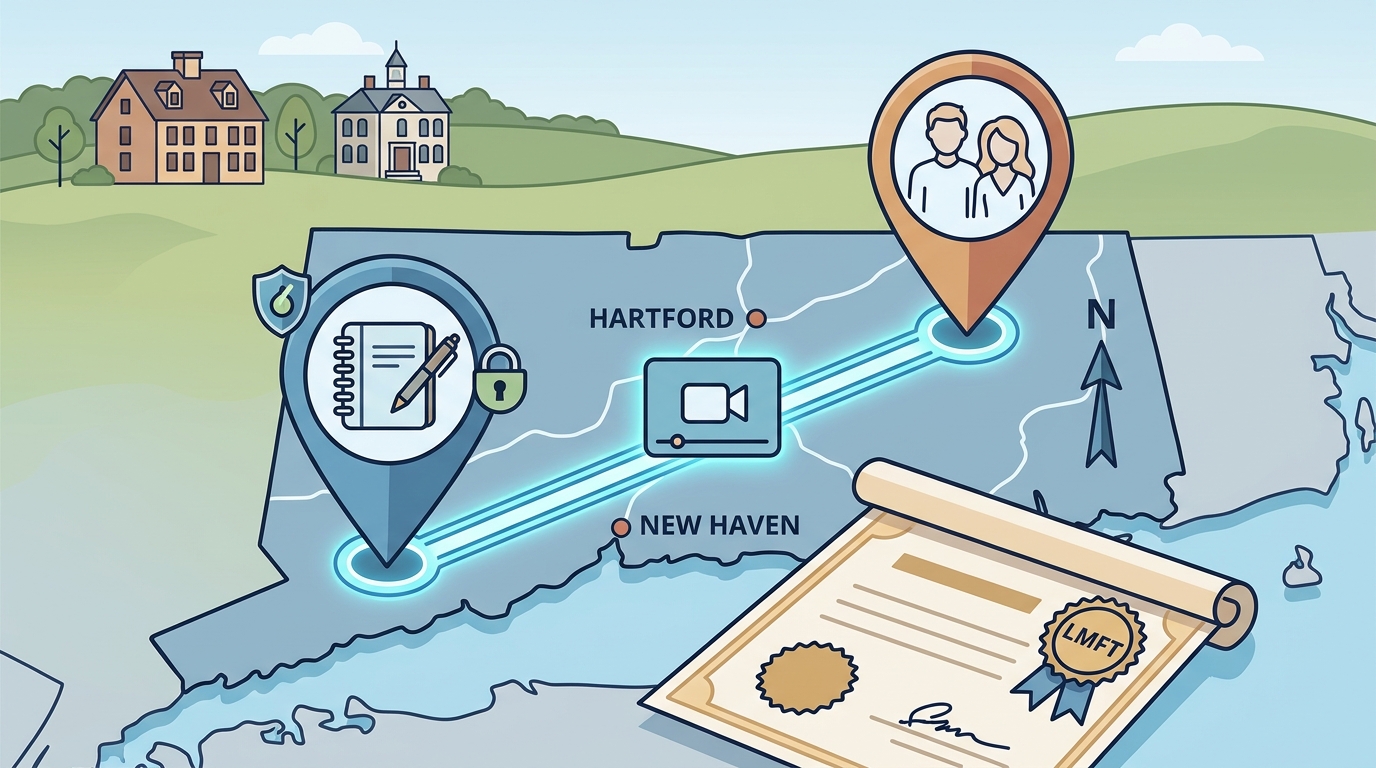
Verifying a therapist's credentials is a critical step in ensuring safety and quality of care. In New York and Connecticut, marriage and family therapists must hold a specific license to practice independently.
Checking License Status
You can verify a therapist's license through the state licensing board. In New York, the Office of the Professions maintains a public directory. In Connecticut, the Department of Consumer Protection oversees licensing. Look for the designation "LMFT" (Licensed Marriage and Family Therapist) for independent practice or "LMFTA" (Licensed Marriage and Family Therapy Associate) for supervised associates. RBM Marriage & Family Therapy lists the credentials of its team members, including Rachel Chernyavskiy, MA, LMFT, and other licensed associates.
Verifying Insurance Participation
Always verify insurance participation directly with your provider. While a practice may list accepted plans, your specific benefits, deductibles, and out-of-pocket costs are determined by your individual insurance policy. Contact your insurance company to confirm that telehealth couples therapy is covered under your plan.
How Telehealth Counseling Works
Telehealth counseling follows a structured process similar to in-person therapy, adapted for a virtual environment. The process typically begins with an initial consultation, followed by regular weekly or bi-weekly sessions.
The Initial Consultation
The first session is usually a consultation to determine fit. This is a low-pressure opportunity to discuss your goals, ask questions, and meet the therapist. RBM Marriage & Family Therapy offers consultations to help you get started. During this time, you will discuss the logistics of the virtual platform and ensure both partners are comfortable with the format.
Regular Sessions
After the consultation, you will schedule regular sessions. These typically last 45 to 50 minutes. The therapist will guide the conversation, helping you identify patterns, improve communication, and develop new skills. Sessions are conducted via secure video, requiring a private, quiet space for both partners.
Costs and Insurance Coverage
The cost of telehealth marriage counseling depends on whether you use insurance or pay out-of-pocket. Understanding the cost structure helps you budget for ongoing care.
Insurance Coverage
Many insurance plans cover behavioral health services, including couples therapy. However, coverage varies. You may have a deductible, copay, or coinsurance. RBM Marriage & Family Therapy accepts many New York and Connecticut insurance plans. It is essential to check your specific benefits with your insurer before starting.
Self-Pay Options
Common Mistakes to Avoid
Couples often make mistakes that can hinder their progress in therapy. Being aware of these common pitfalls can help you get the most out of your sessions.
- Choosing a therapist based solely on price. Cost is a factor, but it should not be the only one. A good fit is more important than a low fee.
- Not preparing for sessions. Coming to sessions without reflecting on the week's interactions can make it harder to make progress. Consider keeping a journal of conflicts or moments of connection.
- Expecting quick fixes. Therapy is a process. It takes time to change deeply ingrained patterns. Be patient with yourself and your partner.
- Ignoring the virtual environment. Ensure you have a stable internet connection and a private space. Technical issues can disrupt the flow of a session.
Telehealth vs. In-Person Therapy
Telehealth and in-person therapy have distinct advantages and limitations. Understanding these differences helps you choose the right format for your needs.
| Convenience | High (no travel) | Lower (travel required) |
| Cost | Often lower (no travel costs) | May include travel costs |
| Privacy | Requires private home space | Private office |
| Nonverbal Cues | Can be limited by screen | Full range of cues |
| Accessibility | High (for those with mobility issues) | Lower |
Telehealth is a suitable alternative for many couples, especially those who value convenience or have difficulty traveling. However, it is not the same as in-person therapy. The lack of physical presence can affect the way nonverbal cues are perceived. RBM Marriage & Family Therapy provides secure virtual sessions that are designed to be practical and effective for real life.
Counseling for Specific Relationship Issues
Different relationship issues may require different therapeutic approaches. Understanding the specific nature of your challenge can help you find a therapist with relevant experience.
Communication and Conflict
Many couples struggle with recurring arguments or difficulty expressing needs. RBM Marriage & Family Therapy offers support for communication issues, helping couples break patterns of misunderstanding and defensiveness. Conflict resolution therapy focuses on managing escalation and creating healthier ways to navigate disagreements.
Trust and Infidelity
Infidelity and broken trust are among the most challenging issues couples face. RBM Marriage & Family Therapy provides specialized support for affair recovery, helping couples understand the impact of betrayal and explore whether healing is possible.
Life Transitions
Major life changes, such as becoming parents, relocating, or retiring, can strain a relationship. RBM Marriage & Family Therapy helps couples navigate these transitions, building shared meaning and resilience.
Legal Rules and Privacy Protections
Telehealth counseling is governed by specific legal and ethical rules designed to protect client privacy and ensure quality care. Understanding these rules helps you feel more secure in the virtual format.
Licensing and Jurisdiction
Therapists are licensed to practice in specific states. In telehealth, the therapist must be licensed in the state where the client is located at the time of the session. RBM Marriage & Family Therapy serves clients in New York and Connecticut, and clients must be located in one of these states during the session. This ensures that the therapist is practicing within their legal jurisdiction.
Privacy and Confidentiality
Therapists are bound by strict confidentiality rules. Telehealth platforms used by licensed practices must be HIPAA-compliant, ensuring that your data and conversations are protected. RBM Marriage & Family Therapy uses secure video platforms to maintain confidentiality. You should ask your provider about their specific privacy protocols and data security measures.
Local Specifics for New York and Connecticut
While telehealth allows you to see a therapist from home, there are local specifics to consider when choosing a provider in New York or Connecticut.
Insurance Networks
Insurance networks vary by state and plan. A therapist who accepts your insurance in New York may not be in-network in Connecticut, or vice versa. RBM Marriage & Family Therapy accepts many major plans in both states, making it a convenient option for couples who may live in different parts of the region.
Time Zones and Scheduling
Timing and When to Start
There is no "perfect" time to start therapy. However, understanding the timing of your decision can help you get the most out of the process.
Early Intervention
Starting therapy early, before patterns become deeply entrenched, can lead to faster progress. If you are noticing recurring conflicts or emotional distance, it may be a good time to consider counseling. RBM Marriage & Family Therapy encourages couples to seek help before issues become overwhelming.
Crisis vs. Maintenance
Some couples seek therapy during a crisis, such as after an affair or a major argument. Others use therapy for maintenance, to strengthen their relationship and prevent future issues. Both approaches are valid. The key is to be open to the process and willing to do the work.
Expected Results Over Time
Therapy is a process, and results vary from couple to couple. However, there are general expectations you can have.
Short-Term Goals
In the first few sessions, you may feel a sense of relief simply by having a safe space to talk. You may also begin to identify patterns in your communication. RBM Marriage & Family Therapy helps couples set realistic short-term goals, such as improving a specific type of conversation.
Long-Term Outcomes
Over time, couples often develop new skills for managing conflict, expressing needs, and building emotional connection. These skills can lead to a more stable and satisfying relationship. The length of therapy varies, but many couples see significant progress within a few months of consistent work.
Key Takeaways
- Telehealth marriage counseling in Connecticut is provided by licensed therapists who offer secure, video-based sessions.
- Choose a provider with specific clinical expertise in couples therapy, such as RBM Marriage & Family Therapy.
- Verify the therapist's license through the state licensing board and confirm insurance participation with your provider.
- Telehealth is a convenient alternative to in-person therapy, but it is not the same. Be aware of the limitations of the virtual format.
- Costs depend on insurance coverage and self-pay fees. Check your specific benefits before starting.
- Common mistakes include choosing a therapist based solely on price and not preparing for sessions.
- Legal rules require therapists to be licensed in the state where the client is located. Ensure your provider is licensed in New York or Connecticut.
- Results vary, but consistent work in therapy can lead to improved communication and a stronger relationship over time.
Frequently Asked Questions
Is telehealth marriage counseling as effective as in-person therapy?
Telehealth is a suitable alternative for many couples, but it is not the same as in-person therapy. The lack of physical presence can affect the way nonverbal cues are perceived. However, many couples find telehealth to be effective and convenient.
How do I verify a therapist's license in Connecticut?
You can verify a therapist's license through the Connecticut Department of Consumer Protection. Look for the designation "LMFT" for independent practice or "LMFTA" for supervised associates.
Does insurance cover telehealth couples therapy?
Many insurance plans cover telehealth couples therapy, but coverage varies. Check your specific benefits with your insurance company. RBM Marriage & Family Therapy accepts many major New York and Connecticut insurance plans.
How long does couples therapy typically take?
The length of therapy varies from couple to couple. Some couples see significant progress within a few months, while others may need longer-term support. Consistency is key.
What should I do if I am not a good fit with my therapist?
If you are not a good fit with your therapist, it is okay to switch. Therapy is a collaborative process, and a good fit is essential for progress. You can discuss your concerns with your therapist or seek a new provider.
Can I do couples therapy if my partner is not willing to participate?
Couples therapy typically requires both partners to participate. However, individual therapy can also be helpful if you are struggling with relationship issues. RBM Marriage & Family Therapy offers individual therapy for adults in New York and Connecticut.
What is the cost of self-pay couples therapy?
How do I prepare for my first telehealth session?
Prepare by ensuring you have a stable internet connection and a private, quiet space. Consider keeping a journal of conflicts or moments of connection to discuss during the session. RBM Marriage & Family Therapy offers consultations to help you get started.