
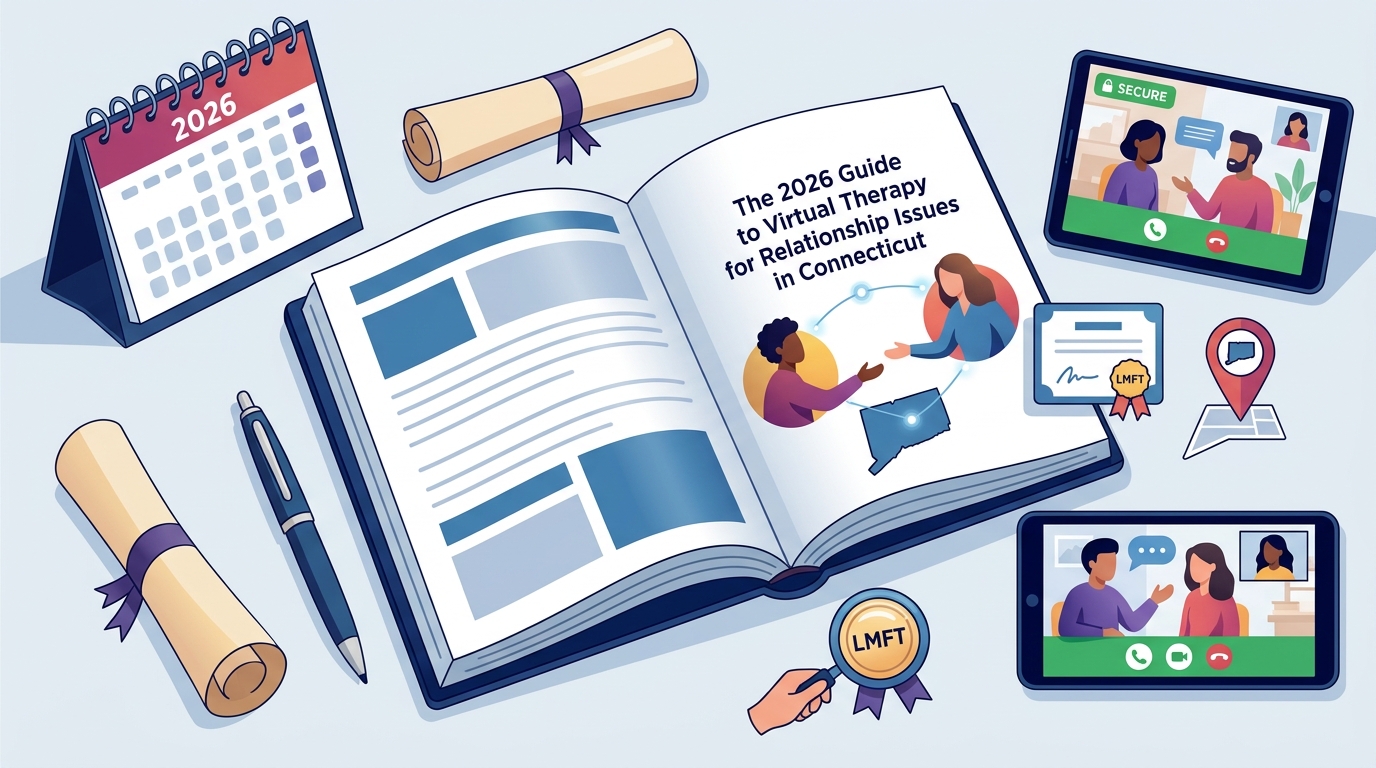
Virtual Therapy for Relationship Issues in Connecticut: The 2026 Guide
Virtual therapy for relationship issues in Connecticut is provided by licensed marriage and family therapists who offer secure, telehealth-based counseling for couples and individuals. This guide explains how to identify qualified providers, verify their credentials, understand the process, and navigate costs. It covers the specific rules governing telehealth in the state and how to choose a therapist who fits your unique relationship dynamic.
How to Choose a Provider
Choosing the right therapist is the most critical step in resolving relationship issues. A good provider offers a safe, non-judgmental space where both partners feel heard. You should look for a therapist who specializes in couples work, as general individual therapists may not have the specific training to manage the dynamic between two people. At RBM Marriage & Family Therapy, our licensed therapists focus specifically on the relational patterns that cause conflict, ensuring the treatment is tailored to your partnership rather than just one person's symptoms.
Specialization Matters
Not all therapists are trained in systemic or couples approaches. Look for credentials such as LMFT (Licensed Marriage and Family Therapist) or specific training in models like Emotionally Focused Therapy (EFT) or the Gottman Method. These frameworks provide structured tools for communication and conflict resolution. A therapist who only practices individual CBT may not be equipped to handle the complex interplay of attachment and communication in a couple.
Comfort and Fit
Chemistry with your therapist is essential. If you feel judged or unheard during the initial consultation, it is a sign to look elsewhere. The therapeutic relationship is the primary vehicle for change. You need a provider who can hold space for difficult emotions without taking sides. This neutrality is what allows couples to lower their defenses and engage in honest dialogue. For additional details, review the Contact Us RBM Marriage.
What to Ask Before Committing
Before booking a full session, use the initial consultation to ask specific questions. This helps you gauge the therapist's approach and ensures they are a good fit for your specific issues. Do not hesitate to ask about their experience with your particular situation, whether it is infidelity, communication breakdown, or life transitions.
Key Questions to Ask
- What is your primary therapeutic model for couples?
- How do you handle it if one partner is more resistant than the other?
- What does a typical treatment plan look like for our specific issue?
- Do you offer a sliding scale or accept our insurance?
These questions reveal the therapist's clinical depth and their ability to manage the logistics of your care. A confident therapist will answer these clearly and explain how their methods apply to your case.
How to Verify Credentials
Verifying a therapist's license is a simple but vital step. In Connecticut, you can check the status of a license through the state's official licensing board. This ensures the provider is currently active and in good standing. It also confirms that they have completed the required supervised hours to practice independently.
Checking the License
Visit the Connecticut Department of Consumer Protection or the relevant mental health licensing board website. Enter the therapist's name to view their license type, expiration date, and any disciplinary actions. This public record protects you from working with unlicensed or compromised providers. It is a standard practice for informed clients to perform this check before their first session.
How the Process Works
Virtual therapy follows a structured sequence designed to build trust and address core issues. The process typically begins with an intake, moves to assessment, and then enters the active treatment phase. Understanding this timeline helps set realistic expectations for the journey ahead.
The Initial Intake
The first session is usually a consultation. The therapist will ask about your history, current stressors, and goals for therapy. This is not a time to solve everything, but to establish a baseline. Both partners will have the opportunity to share their perspective, allowing the therapist to understand the dynamic between you.
Active Treatment
Once the assessment is complete, the therapist will propose a plan. Sessions will focus on specific skills, such as active listening, conflict de-escalation, or rebuilding trust. The frequency is usually weekly, but this can be adjusted based on your progress. The goal is to move from reactive patterns to intentional, healthy interactions.
What It Costs
The cost of therapy varies based on the provider's experience, location, and whether you use insurance. In Connecticut, standard session fees for licensed therapists can range significantly. Understanding the financial structure helps you plan for the commitment required for effective treatment.
Insurance and Self-Pay
Many providers accept major insurance plans, which can significantly reduce your out-of-pocket costs. However, coverage for couples therapy varies by plan. Some insurance policies cover individual sessions but not joint sessions. It is crucial to verify your benefits with your provider directly. At RBM Marriage & Family Therapy, we accept many New York and Connecticut insurance plans, making care more accessible for our clients.
Common Mistakes to Avoid
Couples often make errors that hinder their progress. One common mistake is expecting the therapist to take sides. The therapist's role is to facilitate understanding, not to judge who is right or wrong. Another mistake is inconsistency. Missing sessions or not doing the