
What is Typical Cost for Online Marriage Counseling in Connecticut?
Session Costs
Factors Influencing Price
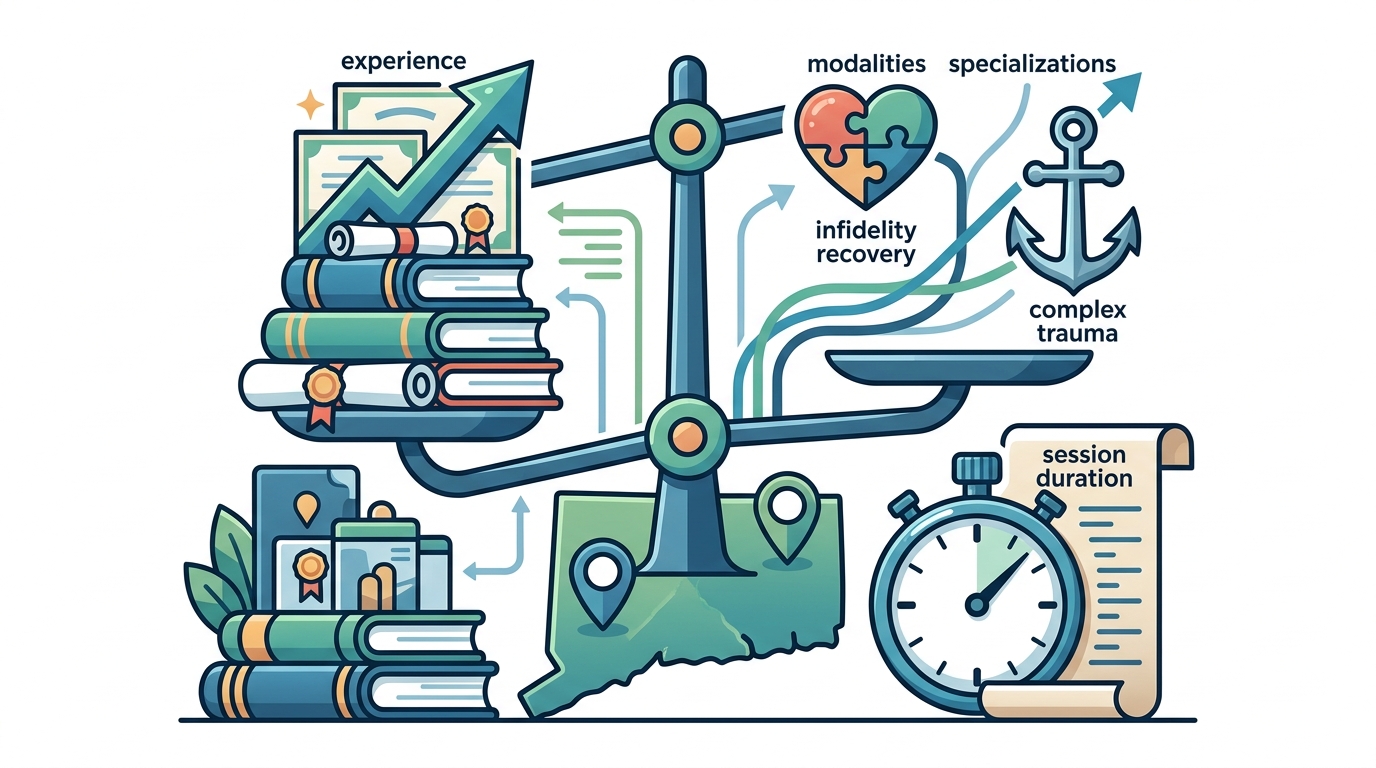
Several variables can shift the cost of your sessions. The therapist's experience level, the specific modality used, and the location of the practice all play a role. For example, a therapist who specializes in complex trauma or infidelity recovery may charge at the higher end of the spectrum. Additionally, the length of the session matters. Standard couples sessions are typically 50 to 60 minutes, but some practices may offer shorter or longer blocks at different rates.
Online vs. In-Person Pricing
Online therapy often mirrors in-person pricing, though some providers may adjust rates slightly for the convenience of telehealth. At RBM Marriage & Family Therapy, sessions are conducted via secure video, ensuring privacy and accessibility for clients across New York and Connecticut. The cost remains consistent whether you are in Danbury, Hartford, or New York City, removing the barrier of travel time and associated expenses.
Insurance Coverage
Using health insurance is the most common way to reduce the financial burden of couples therapy. Insurance coverage for marriage counseling varies significantly by plan, but most major carriers in Connecticut provide benefits for mental health services. When a therapist is in-network, your out-of-pocket cost is usually limited to a copay or coinsurance amount.
Understanding Copays and Deductibles
Network Status and Prior Authorization
It is critical to verify if your therapist is in-network with your specific insurance plan. Out-of-network providers may still be covered under out-of-network benefits, but the reimbursement rates are lower, and you often pay the full fee upfront. Some plans require prior authorization for couples therapy, meaning you must get approval before starting sessions. RBM Marriage & Family Therapy accepts most New York and Connecticut insurance plans, making it easier for clients to navigate these requirements.
Sliding Scale Fees
Not everyone can afford standard out-of-pocket rates or has insurance that covers couples therapy. Sliding scale fees are a payment model where the cost of therapy is adjusted based on your income and ability to pay. This approach ensures that financial constraints do not prevent couples from accessing the support they need.
How Sliding Scale Works
Therapists offering sliding scale fees typically reserve a small number of slots for clients who qualify. You may be asked to provide proof of income, such as tax returns or pay stubs, to determine your fee tier. The discount can range from 10% to 50% off the standard rate. It is important to note that sliding scale fees are not guaranteed and depend on the therapist's availability and specific practice policies.
Alternatives to Sliding Scale
If sliding scale is not available, consider other options. Some therapists offer payment plans that allow you to spread the cost over several months. Community mental health centers and university training clinics also provide low-cost therapy services. Additionally, some employers offer Employee Assistance Programs (EAPs) that cover a limited number of free counseling sessions. Exploring these alternatives can make therapy more accessible without compromising the quality of care.
| Payment Method | Typical Cost Range | Key Considerations |
|---|
Key Takeaways
- Sliding scale fees offer discounted rates based on income, but availability is limited.
- Verify your therapist's network status and prior authorization requirements before starting therapy.
- Online therapy provides the same quality of care as in-person sessions with the added benefit of convenience.
- Payment plans and Employee Assistance Programs (EAPs) are viable alternatives if insurance is not an option.
- Investing in couples therapy is a proactive step toward strengthening your relationship and improving communication.
Frequently Asked Questions
How much does online marriage counseling cost in Connecticut?
Does insurance cover couples therapy in Connecticut?
Most major insurance plans in Connecticut cover couples therapy, but coverage varies by plan. You should check your specific benefits to see if couples therapy is included and if prior authorization is required.
What is a sliding scale fee in therapy?
A sliding scale fee is a discounted rate offered by therapists based on a client's income and ability to pay. This makes therapy more accessible for those who cannot afford standard rates.
Is online therapy as effective as in-person therapy?
Research shows that online therapy can be just as effective as in-person therapy for many issues, including couples counseling. The key is finding a therapist who is a good fit for your needs and communication style.
How do I find a therapist who accepts my insurance?
Start by contacting your insurance provider to get a list of in-network therapists. You can also use online directories to filter therapists by insurance plan and location. Verify the therapist's network status directly with their office before scheduling.
What if I don't have insurance?
If you don't have insurance, consider looking for therapists who offer sliding scale fees or payment plans. Community mental health centers and university clinics are also good options for low-cost therapy.
How many sessions of couples therapy do I need?
The number of sessions needed varies depending on the complexity of the issues and the goals of the couple. Some couples see improvement in 6 to 12 sessions, while others may need longer-term support.
Conclusion
Understanding the cost of online marriage counseling in Connecticut is essential for making informed decisions about your relationship's health. Whether you choose to pay out-of-pocket, use insurance, or seek sliding scale fees, there are options available to fit your budget. RBM Marriage & Family Therapy offers secure, confidential online counseling for couples in New York and Connecticut, providing a practical and accessible path toward healing and connection. To begin your journey, to schedule a consultation and explore your options.