

Where to Find an Online Therapist in New York for Anxiety or Depression
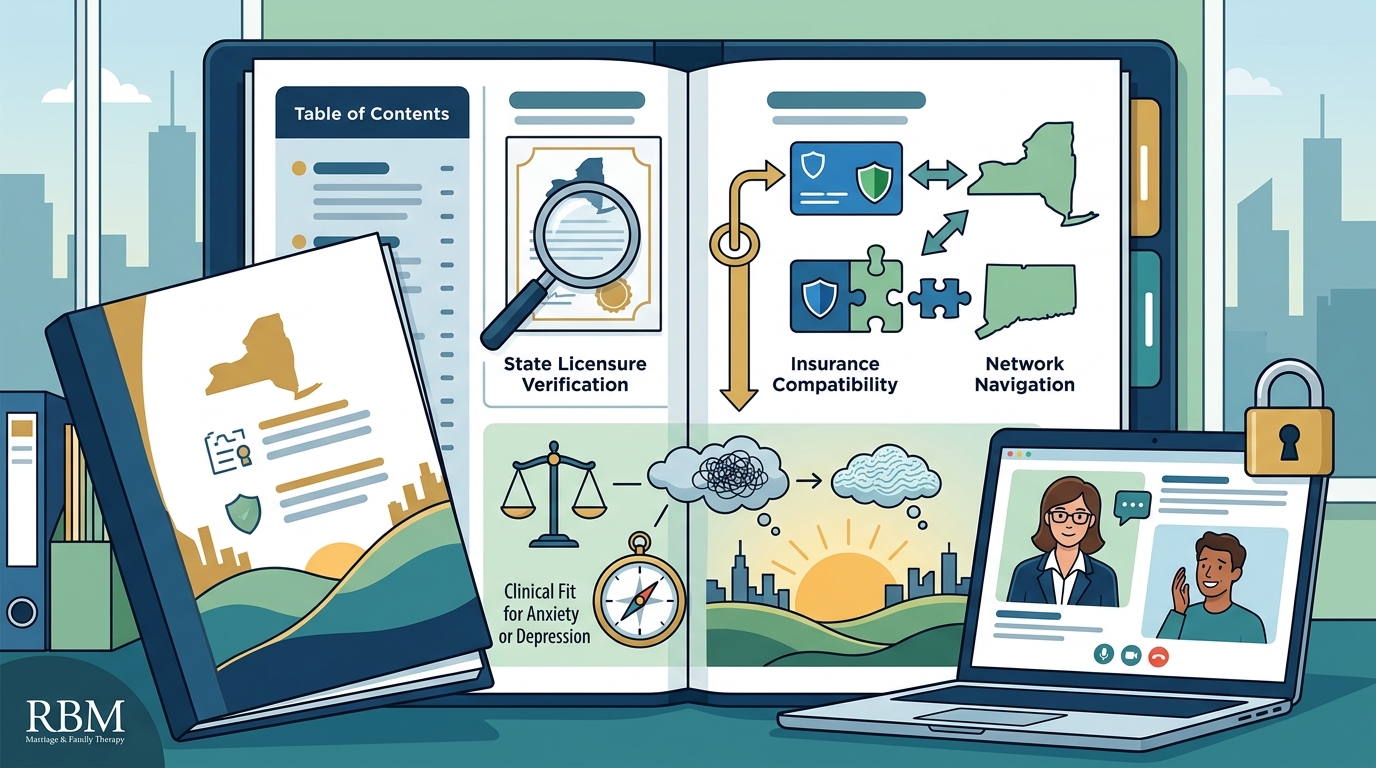
Online therapy is a secure, evidence-based way to access mental health care from home. For residents of New York, finding the right provider requires verifying state licensure, insurance compatibility, and clinical fit. This guide explains how to locate licensed professionals, navigate insurance networks, and select a therapist for anxiety or depression.
Understanding Online Therapy in New York
Online therapy is the delivery of mental health services via secure video, phone, or messaging platforms. In New York, telehealth is regulated to ensure patient safety and confidentiality. Providers must be licensed in the state where the client is physically located during the session. This regulation protects consumers by ensuring that therapists meet strict educational and clinical standards.
Legal and Regulatory Framework
New York State requires mental health professionals to hold active licenses to practice. For marriage and family therapy, the license is the Licensed Marriage and Family Therapist (LMFT) credential. This designation indicates that the provider has completed graduate-level education, supervised clinical hours, and passed national examinations. When searching for care, verifying this specific license is the first step in ensuring quality.
Scope of Practice for Anxiety and Depression
Therapists treat anxiety and depression using evidence-based modalities such as Cognitive Behavioral Therapy (CBT) and Emotion-Focused Therapy (EFT). These approaches are effective for managing symptoms, improving coping skills, and enhancing daily functioning. Online sessions provide the same clinical structure as in-person visits, allowing for consistent, private support from a comfortable environment.
Finding Licensed Therapists
Identifying a qualified provider involves checking state licensure and professional credentials. The New York State Office of the Professions maintains a public directory of licensed mental health professionals. This resource allows you to verify a therapist's license status, discipline, and any disciplinary actions. Using this directory ensures that the provider you select is legally authorized to practice in New York.
Verifying Credentials
When reviewing a therapist's profile, look for specific credentials such as MA, LMFT, or PhD. These abbreviations indicate the level of education and licensure held. For example, an LMFT is a licensed clinician who can diagnose and treat mental health conditions. It is important to distinguish between licensed clinicians and unlicensed associates or coaches, as only licensed professionals can provide clinical therapy for anxiety and depression.
Specialization and Experience
Not all therapists specialize in every condition. When searching for help with anxiety or depression, look for providers who list these conditions in their areas of expertise. Experience with specific symptoms, such as panic attacks or chronic low mood, can indicate a therapist's proficiency in treating your particular needs. Reviewing a provider's bio and service descriptions helps you assess their clinical focus.
Insurance and Cost Considerations
Cost is a significant factor in accessing mental health care. In New York, many insurance plans cover telehealth services for anxiety and depression. Understanding your specific benefits is essential before scheduling an appointment. Most major insurance carriers, including Aetna, Cigna, and UnitedHealthcare, accept telehealth claims for licensed providers.
Checking Your Benefits
Contact your insurance provider to confirm your behavioral health coverage. Ask about your deductible, copay, and coinsurance rates for out-of-network or in-network telehealth visits. Some plans require a referral from a primary care physician before covering therapy sessions. Knowing these details helps you budget for care and avoid unexpected expenses.
Self-Pay Options
Matching Your Therapist to Your Needs
Choosing the right therapist is as important as finding a licensed one. The therapeutic relationship, or alliance, is a strong predictor of treatment success. When evaluating potential providers, consider their communication style, availability, and approach to treatment. A good match feels supportive, non-judgmental, and aligned with your goals.
Assessing Clinical Approach
Different therapists use different therapeutic modalities. For anxiety, CBT is often recommended for its focus on changing thought patterns. For depression, Interpersonal Therapy (IPT) or EFT may be more effective. Reviewing a therapist's description of their methods helps you understand how they work. If a provider lists multiple modalities, ask how they tailor their approach to individual clients.
Scheduling and Logistics
Therapy Platforms and Directories
Several online platforms and directories connect clients with licensed therapists. These resources simplify the search process by filtering providers based on location, insurance, and specialty. Using a reputable directory can save time and ensure you are connecting with verified professionals. according to Online Psychotherapy in
| Resource Type | Key Features | Best For |
|---|---|---|
| State Licensure Directory | Verifies license status and discipline | Confirming legal authority to practice |
| Insurance Provider Directory | Lists in-network therapists | Maximizing insurance coverage |
| Private Practice Websites | Detailed bios and service descriptions | Assessing clinical fit and specialization |
Using Private Practice Websites
Many therapists maintain their own websites with detailed information about their services. For example, RBM Marriage & Family Therapy provides specific pages for anxiety and depression, outlining their approach and qualifications. These sites often include a contact form or scheduling link, making it easy to initiate the process. Reviewing the team page can also help you understand the practice's overall philosophy and expertise.
Professional Associations
Key Takeaways
- Verify New York State licensure using the Office of the Professions directory.
- Check your insurance benefits for telehealth coverage before scheduling.
- Look for therapists who specialize in anxiety or depression.
- Consider the therapeutic modality, such as CBT or EFT, when choosing a provider.
- Use reputable directories and private practice websites to find verified professionals.
- Assess the therapeutic fit during an initial consultation.
- Ensure the technology platform is secure and user-friendly.
- Consistency in attendance is key to successful treatment outcomes.
Frequently Asked Questions
Is online therapy as effective as in-person therapy?
Research indicates that online therapy can be effective for many conditions, including anxiety and depression. The key is the quality of the therapeutic relationship and the use of evidence-based techniques. While the medium differs, the clinical process remains the same. according to Online Psychotherapy in
How do I verify a therapist's license in New York?
You can verify a license through the New York State Office of the Professions website. This public directory allows you to search by name and view the license status, discipline, and expiration date.
Does insurance cover online therapy for anxiety?
Many insurance plans cover telehealth services for anxiety. You should contact your provider to confirm your specific benefits, including deductibles and copays, before starting treatment.
What is the difference between an LMFT and a psychologist?
An LMFT is a licensed marriage and family therapist, while a psychologist holds a doctoral degree in psychology. Both can treat anxiety and depression, but their training and focus areas may differ.
How many sessions will I need for depression?
The number of sessions varies by individual. Some clients see improvement in a few weeks, while others may require longer-term support. Your therapist will help you set goals and evaluate progress over time.
Can I switch therapists if I don't feel a connection?
Yes, you can switch therapists at any time. Finding the right fit is important for your comfort and success. If you feel the relationship is not working, it is appropriate to seek a new provider.
What should I expect in the first session?
The first session is typically an intake interview. The therapist will ask about your history, symptoms, and goals. This is also an opportunity for you to ask questions and assess if you feel comfortable with the provider.
Are online sessions confidential?
Yes, online therapy sessions are confidential and protected by HIPAA regulations. Providers use secure, encrypted platforms to ensure the privacy of your communications.
Conclusion
Finding the right online therapist in New York for anxiety or depression requires a methodical approach. Start by verifying licensure, checking insurance benefits, and reviewing provider specializations. By using reputable directories and private practice websites, you can identify qualified professionals who align with your needs. RBM Marriage & Family Therapy offers secure, licensed online sessions for adults in New York and Connecticut, providing a practical path to support. Take the first step by scheduling a consultation to discuss your goals and find the right fit for your journey toward better mental health.