

Who Offers Online Therapy for Burned-Out Professionals in New York?
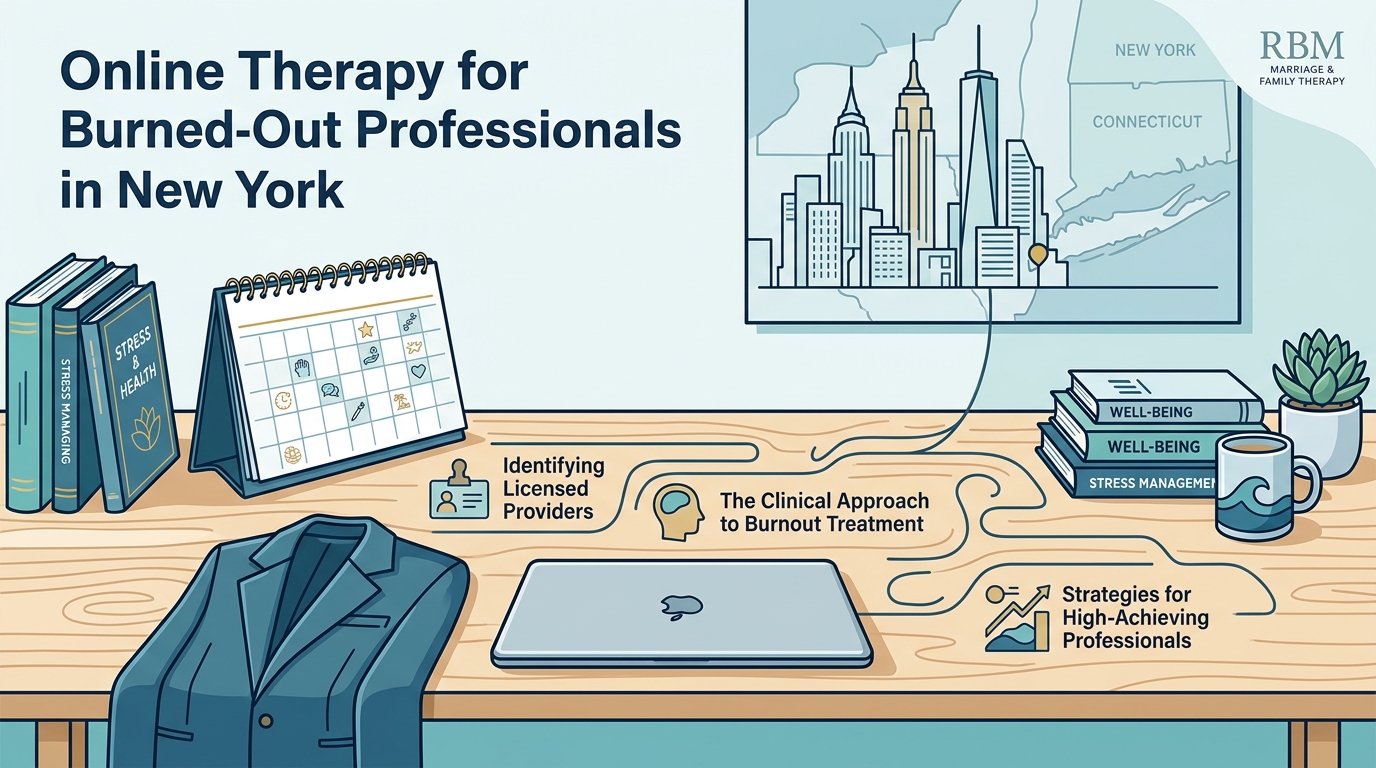
RBM Marriage & Family Therapy provides licensed online therapy for burned-out professionals in New York and Connecticut. This guide covers how to identify qualified providers, the clinical approach to treating burnout, and specific strategies for high-achieving professionals seeking sustainable recovery.
Online Therapy Providers
Choosing the right provider is the first step in addressing professional burnout. In New York and Connecticut, licensed marriage and family therapists (LMFTs) are qualified to treat occupational stress and emotional exhaustion. When evaluating providers, look for specific credentials and a clear understanding of the difference between general stress and clinical burnout.
Qualifications and Licensing
Therapy is a regulated profession. In New York, therapists must hold a license such as LMFT, LMSW, or LCSW to practice independently. At RBM Marriage & Family Therapy, the clinical team consists of licensed professionals who specialize in relational and individual dynamics. It is important to verify that a provider is licensed in the state where you are physically located during the session. For example, a therapist licensed in New York can treat clients located in New York, while those in Connecticut require a Connecticut license. RBM Marriage & Family Therapy serves clients across both states, ensuring compliance with regional telehealth regulations.
Specialization in Occupational Stress
Not all therapists specialize in workplace burnout. Some general practitioners may treat anxiety or depression but may not have specific frameworks for addressing the systemic causes of professional exhaustion. A specialized provider will understand the unique pressures of high-performance environments. They will look beyond symptoms to identify the underlying patterns of overwork, perfectionism, and boundary erosion. This specialized focus ensures that the treatment plan addresses the root causes of depletion rather than just managing the symptoms.
Telehealth Accessibility
Online therapy offers a practical solution for busy professionals. It removes the logistical barriers of commuting and office scheduling. Secure video sessions allow clients to attend appointments from a private space at home or in the office. This flexibility is crucial for individuals whose work schedules are unpredictable. By offering virtual care, providers like RBM Marriage & Family Therapy make it easier for clients to maintain consistent support without adding more logistical strain to their already full calendars.
Burnout Treatment
Burnout is a state of emotional, physical, and mental exhaustion caused by excessive and prolonged stress. It is not a formal diagnosis in the DSM-5, but it is recognized in the ICD-11 as an occupational phenomenon. Effective treatment requires a structured approach that addresses both the psychological and physiological impacts of chronic stress.
Understanding the Clinical Framework
Therapeutic Modalities for Burnout
Different therapeutic approaches can be effective for burnout. Cognitive Behavioral Therapy (CBT) helps clients challenge the negative thought patterns that drive overwork. Emotionally Focused Therapy (EFT) can be useful for addressing the relational impacts of burnout, such as irritability with family members. Internal Family Systems (IFS) helps clients understand the internal parts that may be driving the need for control or achievement. At RBM Marriage & Family Therapy, therapists draw from evidence-based approaches including CBT, EFT, and IFS to tailor treatment to the specific needs of each client. This multi-modal approach ensures that the treatment is comprehensive and personalized.
Building Sustainable Recovery
Recovery from burnout is not about a quick fix. It is a process of rebuilding energy and resilience. This involves learning to recognize early warning signs of stress and implementing coping strategies before reaching a crisis point. It also involves redefining success and value. Many burned-out professionals equate their worth with their productivity. Therapy helps decouple self-worth from output, allowing clients to find a more balanced and sustainable way of working. This shift in perspective is often the most critical part of the recovery process.
High Achieving Professionals
High-achieving professionals often face unique challenges when seeking help for burnout. They may feel that they should be able to handle their stress on their own. They may fear that taking time for therapy will be seen as a lack of commitment or competence. These perceptions can create significant barriers to seeking support.
The Perfectionism Trap
Perfectionism is a common driver of burnout in high-achievers. The need to be flawless can lead to chronic overwork and an inability to delegate. This constant pressure can result in a state of hyperarousal where the nervous system is always on alert. Therapy helps high-achieving professionals examine the origins of their perfectionism. It explores how these patterns were formed and how they are maintained. By understanding the function of perfectionism, clients can begin to loosen its grip and adopt more flexible standards for themselves.
Identity and Self-Worth
For many professionals, their identity is deeply tied to their career. When burnout strikes, it can feel like a threat to their sense of self. This can lead to feelings of shame and isolation. Therapy provides a safe space to explore these identity issues. It helps clients build a more integrated sense of self that is not solely dependent on professional achievement. This broader sense of identity provides a buffer against the impacts of workplace stress. It allows clients to maintain their well-being even when their work environment is challenging.
Practical Strategies for Busy Schedules
Time is often the biggest obstacle for high-achieving professionals. They may feel that they do not have the time for therapy. However, investing in therapy can actually save time in the long run by preventing more severe health issues. Online therapy offers a way to fit sessions into a busy schedule. It allows for flexibility in timing and location. By removing the commute, clients can reclaim time that would otherwise be spent in traffic. This makes it easier to prioritize their mental health alongside their professional responsibilities.
Key Takeaways
- Verify that your therapist is licensed in the state where you are physically located during the session.
- Look for providers who specialize in occupational stress and understand the specific dynamics of high-performance environments.
- Burnout is an occupational phenomenon recognized in the ICD-11, distinct from general stress or depression.
- Effective treatment often involves a combination of CBT, EFT, and IFS to address cognitive, emotional, and relational aspects of burnout.
- High-achieving professionals may struggle with perfectionism and identity issues that contribute to burnout.
- Online therapy offers a practical and accessible solution for busy professionals, removing logistical barriers to care.
- Recovery from burnout is a process of rebuilding energy and resilience, not a quick fix.
- RBM Marriage & Family Therapy provides licensed online therapy for adults and couples in New York and Connecticut.
Frequently Asked Questions
Is online therapy as effective as in-person therapy for burnout?
Research suggests that online therapy can be as effective as in-person therapy for many conditions, including anxiety and depression. For burnout, the flexibility of online sessions can be particularly beneficial for busy professionals. It allows for consistent care without the added stress of commuting. The effectiveness of therapy depends more on the quality of the therapeutic relationship and the therapist's competence than on the medium of delivery.
How long does it take to recover from burnout?
The timeline for recovery from burnout varies from person to person. It depends on the severity of the burnout, the individual's support system, and the changes they are able to make in their work and personal life. Some people may see improvements in a few weeks, while others may need several months of ongoing support. Therapy can help accelerate the recovery process by providing tools and strategies for managing stress and rebuilding energy.
Can therapy help with work-life balance?
Yes, therapy can be very helpful for improving work-life balance. It helps clients identify the boundaries they need to set and the strategies they can use to enforce them. It also addresses the underlying beliefs and patterns that may be driving overwork. By working on these deeper issues, clients can create a more sustainable way of living that supports both their professional and personal well-being.
What is the difference between stress and burnout?
Stress is a normal response to pressure. It can be motivating and even enjoyable in small doses. Burnout, on the other hand, is a state of exhaustion that results from chronic stress. It is characterized by emotional depletion, cynicism, and a sense of inefficacy. While stress can be managed with short-term coping strategies, burnout requires a more comprehensive approach that addresses the root causes of the exhaustion.
Do I need a diagnosis to start therapy for burnout?
No, you do not need a formal diagnosis to start therapy for burnout. Many people seek therapy because they are feeling exhausted, overwhelmed, or disconnected from their work. A therapist can help you understand what you are experiencing and develop a plan to address it. If a formal diagnosis is needed for insurance purposes, your therapist can provide the appropriate documentation.
How can I find a therapist who specializes in burnout?
Look for therapists who list burnout, occupational stress, or high-achieving professionals as areas of specialization on their website or in their profiles. You can also ask potential therapists directly about their experience working with burned-out professionals. A good therapist will be able to speak to their specific approach to treating burnout and the modalities they use. RBM Marriage & Family Therapy offers specialized support for these issues.
Is online therapy confidential?
Yes, online therapy is confidential. Therapists are bound by the same ethical and legal standards of confidentiality as in-person therapists. Secure video platforms are used to protect the privacy of the session. You can discuss your concerns and experiences in a safe and private space. This confidentiality is essential for building a strong therapeutic relationship and for you to feel comfortable sharing your thoughts and feelings.
Conclusion
Addressing professional burnout requires a thoughtful and strategic approach. By choosing a qualified provider who understands the unique challenges of high-achieving professionals, you can begin the journey toward sustainable recovery. RBM Marriage & Family Therapy offers licensed online therapy for adults and couples in New York and Connecticut, providing a practical and accessible resource for those seeking support. If you are feeling the weight of chronic stress and exhaustion, consider reaching out to schedule a consultation.
Contact RBM Marriage & Family Therapy to learn more about how we can help you navigate burnout and regain your balance.