

Online Family Therapy for Parents and Children in New York: 2026 Guide
Online family therapy for parents and children in New York is provided by licensed mental health professionals who offer secure, telehealth-based counseling services. These providers help families navigate communication breakdowns, behavioral challenges, and major life transitions. This guide covers how to choose a qualified provider, verify credentials, understand costs, and navigate the specific licensing rules in New York and Connecticut.
How to Choose a Provider
Choosing the right therapist requires looking beyond generic marketing claims. A qualified provider must hold a valid license in the state where the client is physically located during the session. For families in New York, this means the therapist must be licensed in New York. If a family member is in Connecticut, the therapist must also hold a Connecticut license. RBM Marriage & Family Therapy serves clients across both states, ensuring that all family members can participate in the same session regardless of their specific location within the region.
Licensing and Scope of Practice
Family therapy often involves multiple participants. You need a provider whose license allows them to treat the specific age groups in your family. Some therapists specialize in adults only, while others are trained in child and adolescent development. Verify that the provider explicitly lists family or couples therapy in their scope of practice. A therapist who only offers individual adult counseling may not have the training to facilitate a session involving a child and two parents.
Specialization in Family Dynamics
Generalist therapists can be helpful, but specialists often provide more targeted tools. Look for providers who use evidence-based modalities for family systems, such as Emotionally Focused Therapy (EFT) or the Gottman Method. These approaches are specifically designed to address relational patterns, communication loops, and emotional regulation within a family unit. RBM Marriage & Family Therapy utilizes these evidence-based approaches to tailor treatment to the specific needs of each family.
What to Ask Before Committing
Before booking a full session, use a consultation to ask specific questions. This helps you gauge compatibility and logistical fit. Do not hesitate to ask about their experience with your specific family structure or challenge.
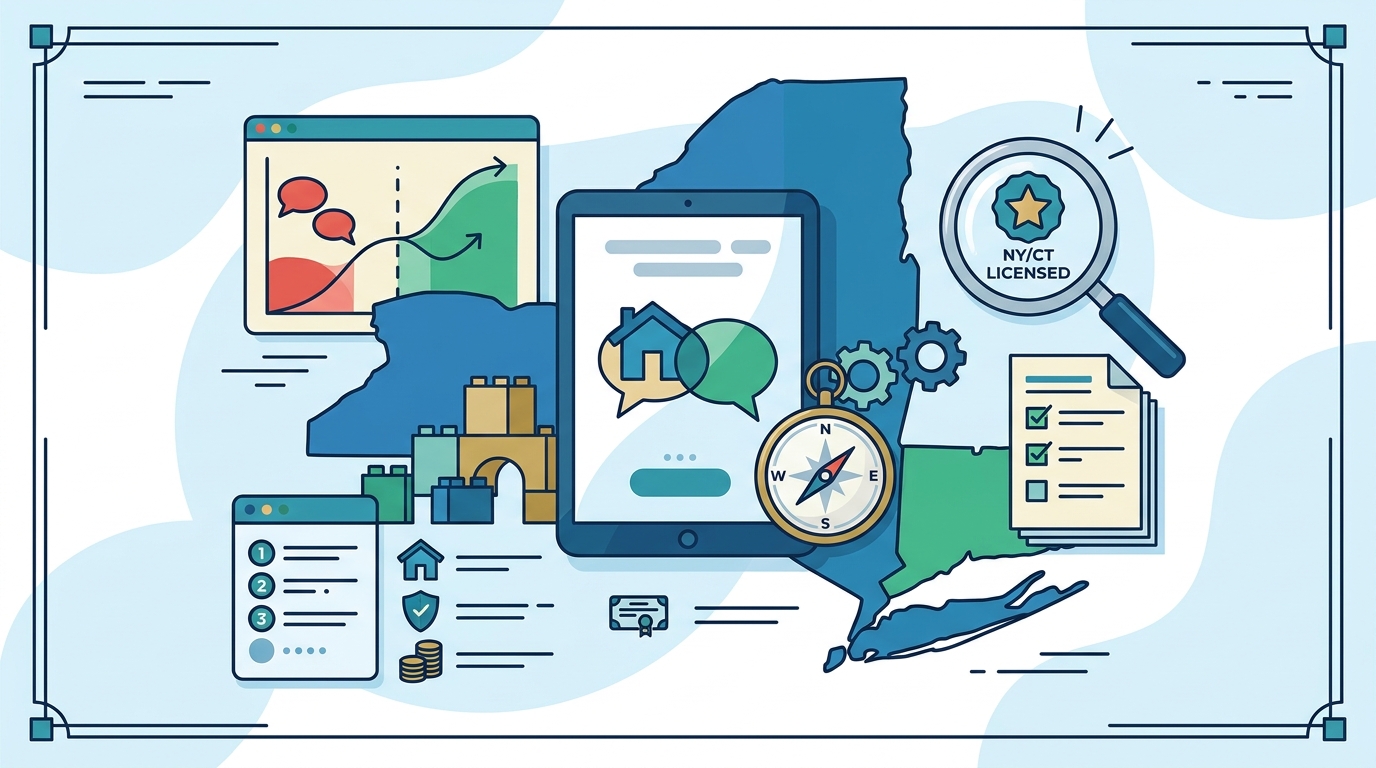
Key Questions for Providers
- Do you hold active licenses in both New York and Connecticut?
- What is your specific experience working with families where members are in different locations?
- How do you handle situations where a child is reluctant to participate?
- What is your approach to confidentiality when multiple family members are in the session?
- Do you accept my specific insurance plan?
These questions reveal the provider's operational readiness and clinical depth. A provider who cannot answer these clearly may not be the right fit for a complex family dynamic.
How to Verify Credentials
Verifying credentials is a critical step in ensuring safety and quality of care. You can check a therapist's license status through the state licensing board. In New York, the Office of the Professions maintains a public database. In Connecticut, the Department of Consumer Protection oversees licensing. Always verify the license number and expiration date.
Checking State Boards
Search for the therapist's name in the state board directory. Confirm that the license is active and in good standing. Check for any disciplinary actions or complaints. This step is non-negotiable for any mental health provider, whether online or in-person. RBM Marriage & Family Therapy lists the credentials of its team members, including their specific licenses and educational backgrounds, to maintain transparency.
How Online Family Therapy Works
Online family therapy follows a structured process similar to in-person care, adapted for the telehealth environment. The process typically begins with an intake, followed by regular sessions, and concludes with a discharge plan.
The Session Process
Sessions are conducted via secure video platforms. All family members who are participating must be in a private, quiet space. The therapist facilitates the conversation, helping each member express their perspective. The goal is to create a safe space for dialogue. Sessions usually last 45 to 60 minutes. Consistency is key, with most families meeting weekly or bi-weekly.
Logistics and Technology
You will need a stable internet connection and a device with a camera and microphone. The provider will send a secure link before the first session. Test your technology beforehand to avoid delays. RBM Marriage & Family Therapy provides clear instructions for joining sessions to ensure a smooth start.
What It Costs
Insurance and Billing
Check with your insurance provider to confirm coverage for telehealth family therapy. Some plans require a referral from a primary care physician. RBM Marriage & Family Therapy accepts many major insurance plans in New York and Connecticut, making care more accessible. Self-pay options are also available for those who prefer not to use insurance.
Common Mistakes to Avoid
Families often make mistakes that hinder progress. One common error is choosing a provider based solely on availability rather than specialization. Another is failing to prepare for sessions. Coming to a session without reflecting on recent interactions can lead to unproductive conversations.
Logistical Errors
Technical issues can disrupt the therapeutic flow. Ensure all participants have a stable connection. Avoid scheduling sessions during times when family members are likely to be distracted or rushed. Consistency is more important than perfection. Missing sessions regularly can slow down progress.
Online vs. In-Person Therapy
Online therapy offers convenience and accessibility, which is particularly beneficial for families with busy schedules or those living in different parts of the state. In-person therapy provides a physical presence that some clients prefer. However, online therapy allows for easier scheduling and eliminates travel time. It is not necessarily inferior to in-person care, but it requires a different set of logistical considerations.
Choosing the Right Format
Consider your family's lifestyle. If you have a child with a full school schedule, online therapy may be easier to fit into the day. If you live far from a specialized provider, online therapy removes the geographic barrier. RBM Marriage & Family Therapy offers secure virtual sessions that fit into real life, providing practical support without the logistical strain of travel.
Therapy for Specific Family Situations
Different family challenges require different therapeutic approaches. For example, a family dealing with a child's behavioral issues may benefit from a therapist trained in parent management training. A family navigating a divorce may need a therapist experienced in co-parenting dynamics.
Common Family Challenges
- Communication Breakdowns: Frequent arguments or silence between partners or parents and children.
- Behavioral Issues: A child's defiance, anxiety, or academic struggles.
- Life Transitions: Moving, a new sibling, or a parent's job loss.
- Grief and Loss: Coping with the death of a family member or a major change in health.
RBM Marriage & Family Therapy helps families with a wide range of conditions, including anxiety, grief, and life transitions, providing tailored support for each unique situation.
Rules and Protections
Online therapy is governed by strict privacy and security laws. The Health Insurance Portability and Accountability Act (HIPAA) protects your health information. Telehealth platforms used by licensed providers must be HIPAA-compliant. This ensures that your video sessions are encrypted and secure.
Confidentiality and Consent
Therapists are bound by confidentiality. However, there are exceptions, such as if a child is in danger or if there is a risk of harm to others. Informed consent is required for all participants. For minors, a parent or guardian must provide consent. The therapist will explain these rules during the first session.
Local Specifics for NY and CT
New York and Connecticut have specific regulations regarding telehealth. Both states require therapists to be licensed in the state where the client is located. This means a therapist based in New York cannot legally treat a client in Connecticut unless they also hold a Connecticut license. RBM Marriage & Family Therapy is licensed to practice in both states, allowing them to serve families across the region seamlessly.
Regional Considerations
Urban areas like New York City and Hartford have many providers, but rural areas may have fewer options. Online therapy bridges this gap, allowing families in less populated areas to access specialized care. Insurance networks also vary by region, so it is important to verify that your provider is in-network in your specific area.
Timing and When to Act
There is no perfect time to start therapy, but acting early can prevent small issues from becoming larger problems. If you are noticing persistent conflict, withdrawal, or behavioral changes, it is a sign to seek help. Waiting too long can make patterns more entrenched and harder to change.
Signs It Is Time to Start
- Arguments are becoming more frequent or intense.
- A family member is withdrawing or showing signs of depression.
- A child is struggling at school or with peers.
- You are feeling overwhelmed and unable to cope with daily stress.
Starting therapy is a proactive step toward improving family well-being. It is a sign of strength, not weakness.
Results Over Time
Therapy is a process, and results take time. Most families begin to notice improvements in communication and emotional regulation within 6 to 12 weeks. Long-term outcomes depend on consistency and the family's willingness to practice new skills outside of sessions.
Measurable Outcomes
Therapists often use standardized scales to measure progress. These tools help track changes in anxiety, depression, and relationship satisfaction. While every family is different, the goal is to move from a state of distress to a state of stability and connection. RBM Marriage & Family Therapy provides educational resources to help families understand the therapeutic process and what to expect.
Key Takeaways
- Verify that your therapist is licensed in the state where each family member is located.
- Choose a provider with specific experience in family or couples therapy.
- Use a consultation to ask about their approach and logistics.
- Check your insurance coverage for telehealth family therapy.
- Ensure all participants have a stable internet connection and a private space.
- Be consistent with sessions to maximize progress.
- Understand that online therapy is a valid and effective form of care.
- Act early to prevent small issues from becoming entrenched patterns.
Frequently Asked Questions
Is online family therapy as effective as in-person therapy?
Do all family members need to be in the same room?
No. In online therapy, family members can join from different locations, as long as they are in a private, quiet space. This is particularly useful for families who live in different parts of the state or country.
How long does family therapy usually last?
The duration of therapy varies depending on the family's specific challenges. Some families may need only a few sessions, while others may benefit from longer-term support. Your therapist will help you set goals and determine the appropriate length of treatment.
What if my child is reluctant to participate?
It is common for children to be hesitant about therapy. A skilled therapist can help build rapport with the child and create a safe space for them to express their feelings. It is important to respect the child's pace while encouraging participation.
Does insurance cover online family therapy?
Many insurance plans cover telehealth services, including family therapy. Check with your provider to confirm your specific benefits. RBM Marriage & Family Therapy accepts many major insurance plans in New York and Connecticut.
How do I find a therapist who is licensed in both NY and CT?
Look for practices that explicitly state they are licensed in both states. RBM Marriage & Family Therapy is a licensed virtual therapy practice serving clients across New York and Connecticut, making it a suitable option for families in both states.