

What Does the Recovery Process Actually Look Like After Infidelity in a Marriage?
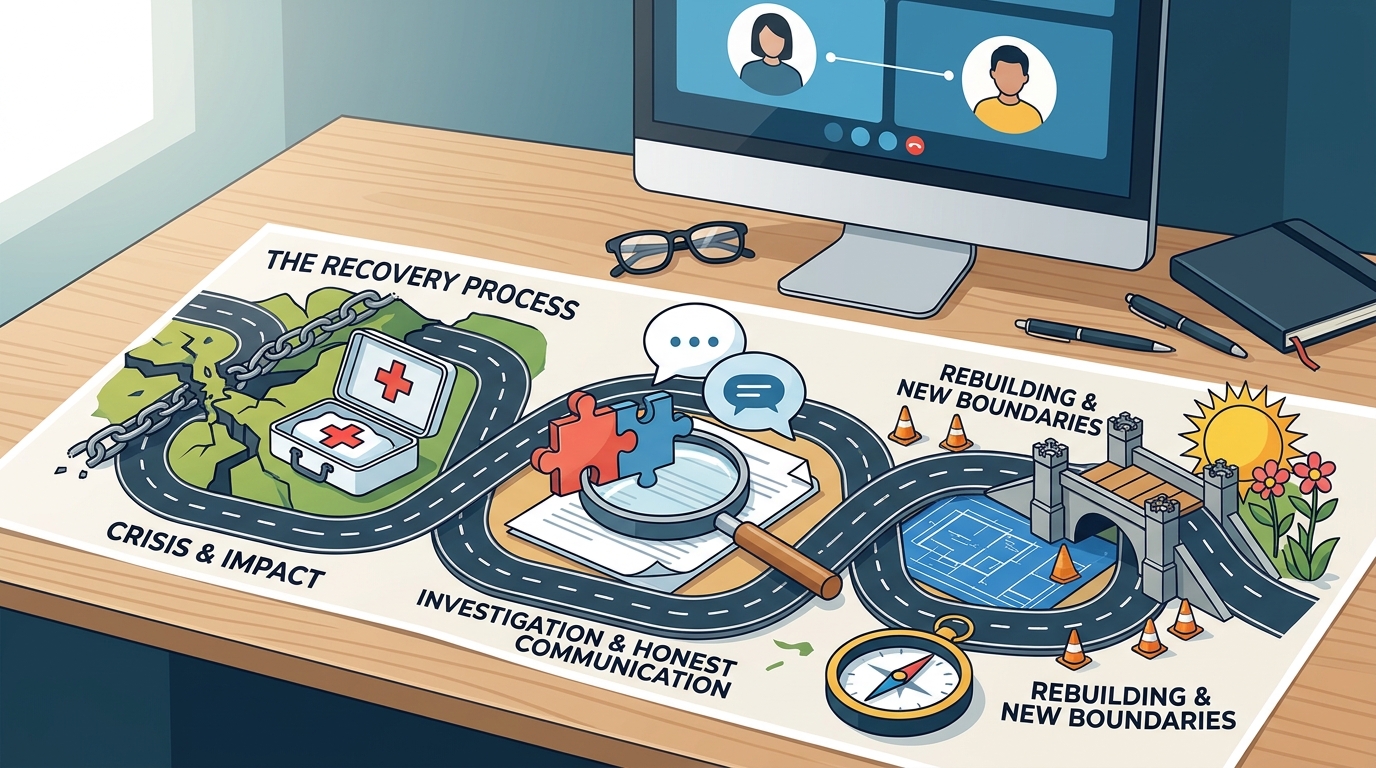
Recovery after infidelity is a structured, non-linear process involving distinct phases of crisis, investigation, and rebuilding. It requires both partners to engage in honest communication, manage intense emotional reactions, and establish new relational boundaries. At RBM Marriage & Family Therapy, we guide couples through this complex journey using evidence-based approaches to restore safety and connection.
The Immediate Crisis and Emotional Shock
The discovery of infidelity often triggers an acute crisis that disrupts the couple's sense of reality. The betrayed partner typically experiences shock, intense grief, and a loss of trust that can feel overwhelming. This phase is characterized by emotional volatility, where the injured partner may oscillate between anger, sadness, and numbness. The unfaithful partner often responds with defensiveness, minimization, or shame, which can further escalate the conflict. Understanding this initial shock as a normal trauma response helps couples avoid making permanent decisions during the most volatile period.
The Investigation and Transparency Phase
Following the initial shock, the recovery process often enters an investigation phase where the betrayed partner seeks answers. This stage involves asking detailed questions about the affair, including its duration, nature, and context. The unfaithful partner must provide transparency and accountability to begin rebuilding a foundation of honesty. While this phase can feel intrusive, it is a critical step in restoring the injured partner's sense of safety. Without clear answers, the betrayed partner may remain in a state of hyperarousal, constantly scanning for signs of deception.
Rebuilding Trust and Emotional Safety
Trust is not restored through words alone but through consistent, reliable behavior over time. The unfaithful partner must demonstrate a sustained commitment to transparency, which may include sharing passwords, schedules, or location data if agreed upon by the couple. This phase requires the injured partner to gradually lower their guard as they observe consistent honesty. It is a slow process where small, reliable actions accumulate to create a new sense of emotional safety. The goal is to move from a state of suspicion to one of verified reliability.
Reconnection and Creating a New Relationship
As trust begins to stabilize, couples can focus on reconnection and intimacy. This phase involves exploring what the relationship was like before the affair and what it could be in the future. Couples often work on improving communication skills, managing conflict, and addressing underlying issues that may have contributed to the affair. The relationship that emerges is often different from the pre-affair dynamic, incorporating new boundaries and a deeper understanding of each partner's needs. This stage is about building a future together rather than simply returning to the past.
The Role of Professional Support in Recovery
Professional therapy provides a structured environment for navigating the intense emotions of infidelity recovery. A licensed therapist can help couples manage the power dynamics that often emerge during the investigation phase. At RBM Marriage & Family Therapy, our therapists use modalities like Emotionally Focused Therapy (EFT) to help partners express their underlying needs and fears. This support ensures that the recovery process remains constructive rather than destructive, allowing both individuals to heal while working toward a shared goal.
Key Takeaways
- Recovery is a non-linear process that typically moves from crisis to investigation to rebuilding.
- The investigation phase requires transparency and accountability from the unfaithful partner.
- Trust is rebuilt through consistent, reliable behavior over time, not just apologies.
- Professional therapy provides essential structure and emotional regulation during the process.
- The post-affair relationship is often different from the pre-affair dynamic.
- Both partners must be committed to the process for successful recovery.
Frequently Asked Questions
How long does it take to recover from infidelity?
There is no fixed timeline for recovery. Some couples may begin to feel more stable within a few months, while others may take years. The duration depends on the severity of the betrayal, the level of transparency, and the couple's ability to manage conflict.
Is it possible to fully trust your partner again after an affair?
Yes, it is possible to rebuild trust, though it often looks different from pre-affair trust. This new trust is based on verified reliability and consistent behavior rather than naive assumption. It requires ongoing effort from both partners.
What is the most common mistake couples make during recovery?
A common mistake is rushing the process or expecting the injured partner to "get over it" quickly. The betrayed partner needs time to process the trauma, and pressuring them can lead to further disconnection.
Can couples therapy help if one partner is not ready to work on the relationship?
Therapy can help the willing partner process their emotions and make informed decisions. It can also provide a space to explore whether the relationship is salvageable or if separation is the healthier option.
What role does shame play in the recovery process?
Shame is a powerful emotion for the unfaithful partner and can lead to defensiveness or withdrawal. Addressing shame in a safe therapeutic environment allows for genuine accountability and empathy.
How can couples manage the intense emotions during the investigation phase?
Couples can benefit from learning emotional regulation techniques and setting boundaries for difficult conversations. A therapist can help mediate these discussions to prevent them from becoming destructive.
Moving Forward with Clarity and Support
Recovering from infidelity is a profound challenge that tests the core of a marriage. It requires courage, patience, and a commitment to honest communication. By understanding the distinct phases of recovery, couples can navigate this difficult terrain with greater clarity. If you are struggling to rebuild your relationship, contact RBM Marriage & Family Therapy to schedule a consultation and begin your journey toward healing.