

What Does Effective Burnout Therapy Actually Look Like in a Typical Online Session?
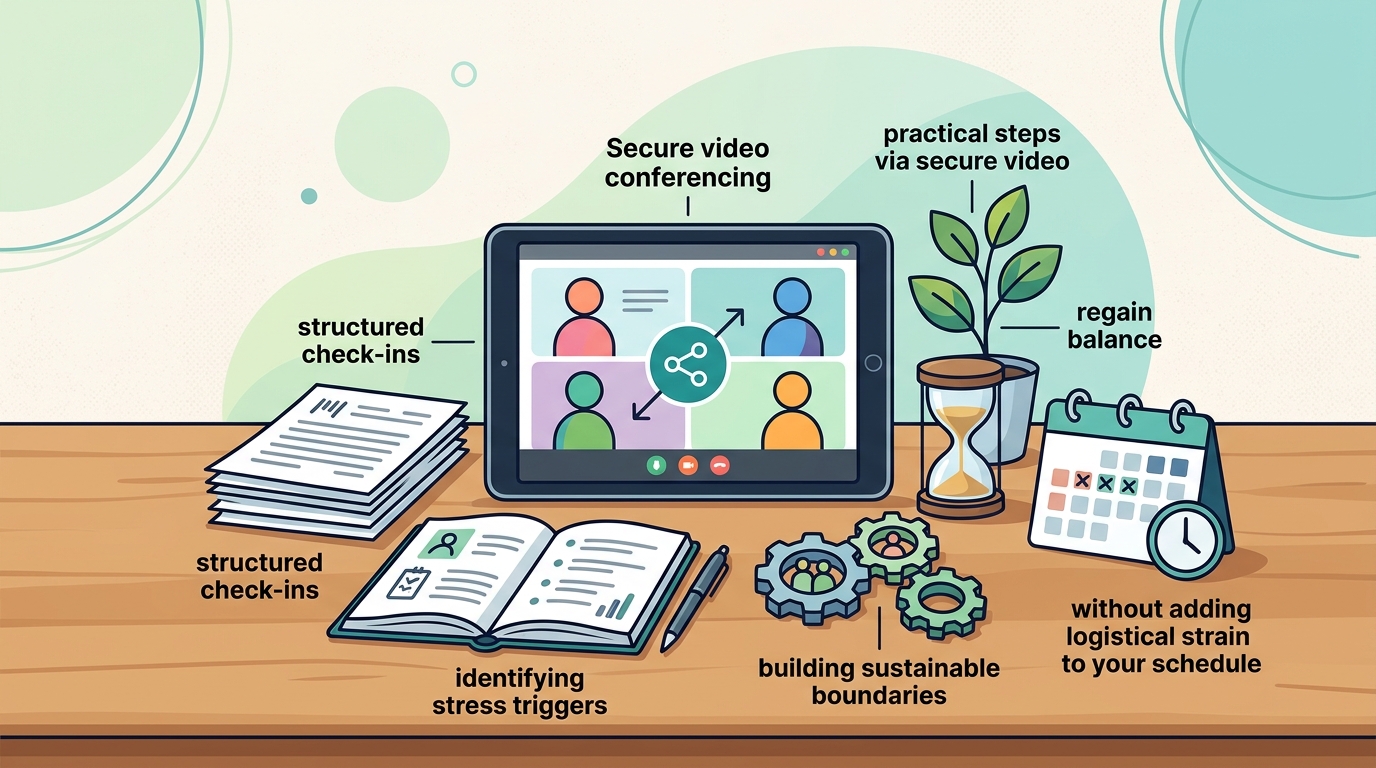
Effective burnout therapy in a typical online session involves structured check-ins, identifying stress triggers, and building sustainable boundaries. At RBM Marriage & Family Therapy, our licensed therapists guide clients through these practical steps via secure video. This approach helps you understand the patterns driving your exhaustion and develop realistic tools to regain balance without adding logistical strain to your schedule.
The Initial Assessment and Safety Check
The first phase of a typical burnout session focuses on establishing a baseline of your current state. Burnout is a state of emotional, physical, and mental exhaustion caused by excessive and prolonged stress. In the initial online sessions, your therapist will ask detailed questions about your sleep, energy levels, and emotional responses to daily tasks. This is not a quick fix but a diagnostic process to understand the specific sources of your depletion.
For example, a client might report feeling physically drained after a standard workday, yet unable to relax during their evening. The therapist will explore whether this stems from workload overload, lack of control, or insufficient recognition. By mapping these specific stressors, the therapist creates a personalized roadmap. This ensures that the therapy targets the root causes rather than just the symptoms of fatigue.
Identifying Cognitive and Behavioral Patterns
Once the baseline is established, the therapy shifts to identifying the cognitive and behavioral patterns that sustain burnout. Chronic stress is the body's prolonged response to perceived threats, which can lead to physical and emotional wear. In online sessions, therapists often use cognitive-behavioral techniques to help clients recognize automatic thoughts that contribute to their exhaustion. These might include perfectionism, an inability to say no, or a belief that rest is a reward for suffering.
Consider a client who feels guilty when they take a break. The therapist helps them examine the evidence for this belief and challenges the underlying assumption that their worth is tied to constant productivity. This cognitive restructuring is a core component of effective treatment. It allows clients to shift from a reactive state of panic to a proactive state of management. The goal is to create mental space where rest feels acceptable rather than shameful.
Building Sustainable Boundaries and Coping Tools
A major focus of ongoing burnout therapy is the development of practical boundaries and coping mechanisms. Emotional resilience is the ability to adapt to difficult situations and recover from stress. In a typical session, the therapist and client might role-play difficult conversations, such as declining an extra project at work or setting limits with family members. These exercises provide a safe space to practice new behaviors before implementing them in real life.
Monitoring Progress and Adjusting the Plan
Effective burnout therapy is an iterative process that involves regular monitoring and adjustment. Progress is not always linear, and setbacks are a normal part of the journey. In online sessions, the therapist will review the client's progress since the last meeting. This includes assessing changes in energy levels, mood, and the effectiveness of the coping strategies used. If a particular approach is not working, the therapist and client will collaboratively adjust the plan.
For instance, if a client finds that their new boundary-setting strategy is causing more anxiety than it relieves, the therapist will help them refine the approach. This might involve starting with smaller, less threatening boundaries or addressing the underlying fear of rejection. This dynamic feedback loop ensures that the therapy remains relevant and responsive to the client's evolving needs. It transforms the therapeutic relationship into a partnership focused on sustainable change.
The Role of the Therapeutic Relationship
The quality of the therapeutic relationship is a critical factor in the success of burnout treatment. A strong alliance provides a sense of safety and validation, which is often lacking in the environments that cause burnout. In online therapy, this connection is built through consistent, empathetic communication and active listening. The therapist serves as a non-judgmental witness to the client's struggles, helping them feel heard and understood.
This relational aspect is particularly important for clients who feel isolated or misunderstood in their professional or personal lives. The therapist helps them reconnect with their own needs and values, which may have been suppressed in the pursuit of productivity. By fostering a supportive environment, the therapy helps clients rebuild their sense of self-worth and agency. This foundational support is what enables the practical tools and cognitive shifts to take root and last.
Key Takeaways
- Effective burnout therapy begins with a detailed assessment to identify specific stressors and baseline symptoms.
- Cognitive-behavioral techniques are used to challenge beliefs that link self-worth to constant productivity.
- Practical boundary-setting and coping tools are developed and practiced in a safe therapeutic space.
- Regular monitoring and plan adjustments ensure the therapy remains responsive to the client's progress.
- A strong therapeutic relationship provides the validation and safety necessary for sustainable change.
- Online therapy offers a convenient and accessible way to receive this structured support from home.
Frequently Asked Questions
How long does burnout therapy typically take?
The duration of burnout therapy varies depending on the severity of the burnout and the individual's response to treatment. Some clients may see significant improvement in a few months, while others may require longer-term support to address underlying patterns. The therapist will regularly assess progress and adjust the treatment plan accordingly.
Is online therapy as effective as in-person therapy for burnout?
Research suggests that online therapy can be highly effective for treating burnout, offering the same core therapeutic interventions as in-person sessions. The convenience of online sessions can also be a benefit, as it reduces the logistical burden of travel, which can be a significant factor for individuals already experiencing exhaustion. according to The effectiveness of
What if I don't know if I have burnout?
If you are unsure whether you are experiencing burnout, a consultation with a licensed therapist can help. They can assess your symptoms and provide a clear understanding of what you are going through. You do not need to have a definitive diagnosis to begin therapy; the process of exploring your feelings and stressors is itself a valuable step.
Can therapy help with work-related burnout specifically?
Yes, therapy can be very effective for work-related burnout. It helps you understand the specific dynamics of your work environment that are contributing to your exhaustion and develop strategies to manage them. This might include setting boundaries, negotiating workload, or exploring whether a change in role or job is necessary for your long-term well-being.
How do I find the right therapist for burnout?
When looking for a therapist, consider their experience with burnout and their therapeutic approach. It is also important to feel comfortable with the therapist, as the therapeutic relationship is a key factor in treatment success. Many practices, including RBM Marriage & Family Therapy, offer initial consultations to help you determine if there is a good fit.
Start Your Path to Recovery
Recovering from burnout is a journey that requires support, structure, and practical tools. Effective online therapy provides a safe and accessible space to navigate this process, helping you understand the root causes of your exhaustion and build a more sustainable way of living. If you are feeling overwhelmed and ready to take the first step, contact our team to schedule a consultation and begin your path to recovery.